Most grillz guides start with metal and price. This one starts with the decision you actually make first: the style. Two people can both order a six-tooth top set in 14K gold and end up with pieces that look nothing alike, because style controls how much tooth the metal covers, whether there are stones, and how the surface catches light. Getting the style right is what separates a grill that looks intentional from one that looks like a placeholder. Here is how the main styles differ, who each one suits, and what the look does to the price.
Coverage comes first: open face versus solid
Every grill sits somewhere on a coverage spectrum, and the two anchor points are open face and solid. Open face grillz frame the edge of each tooth and leave the center of the enamel exposed, so you see a gold outline with your natural tooth showing through the middle. It reads as clean and understated, it is the lightest style on the mouth, and because it uses less metal it is usually the most affordable way into a real gold grill. First-time buyers who want something they can wear day to day tend to land here.
Solid grillz, sometimes called full-face, cover the entire visible surface of each tooth in unbroken metal. This is the look most people picture when they hear the word grillz: a continuous wall of gold with no enamel showing. It makes a stronger statement, it hides tooth color and minor shape differences, and it costs more than open face simply because it uses more material. Neither style is more correct than the other; they answer different questions about how visible you want the piece to be. A good middle path some wearers choose is open face on the top row for everyday wear and solid on the bottom for photos and events.
Adding light: diamond cut, stone-set, and bustdown
Once coverage is settled, the next choice is texture. A plain solid grill has a smooth, mirror-like surface. Diamond cut grillz add hand-cut diagonal grooves across the metal that break up the surface into facets, so the piece throws off flashes of light as you move without adding a single stone. It is a way to get sparkle on a budget, and it typically adds only a modest amount per tooth over a plain finish.
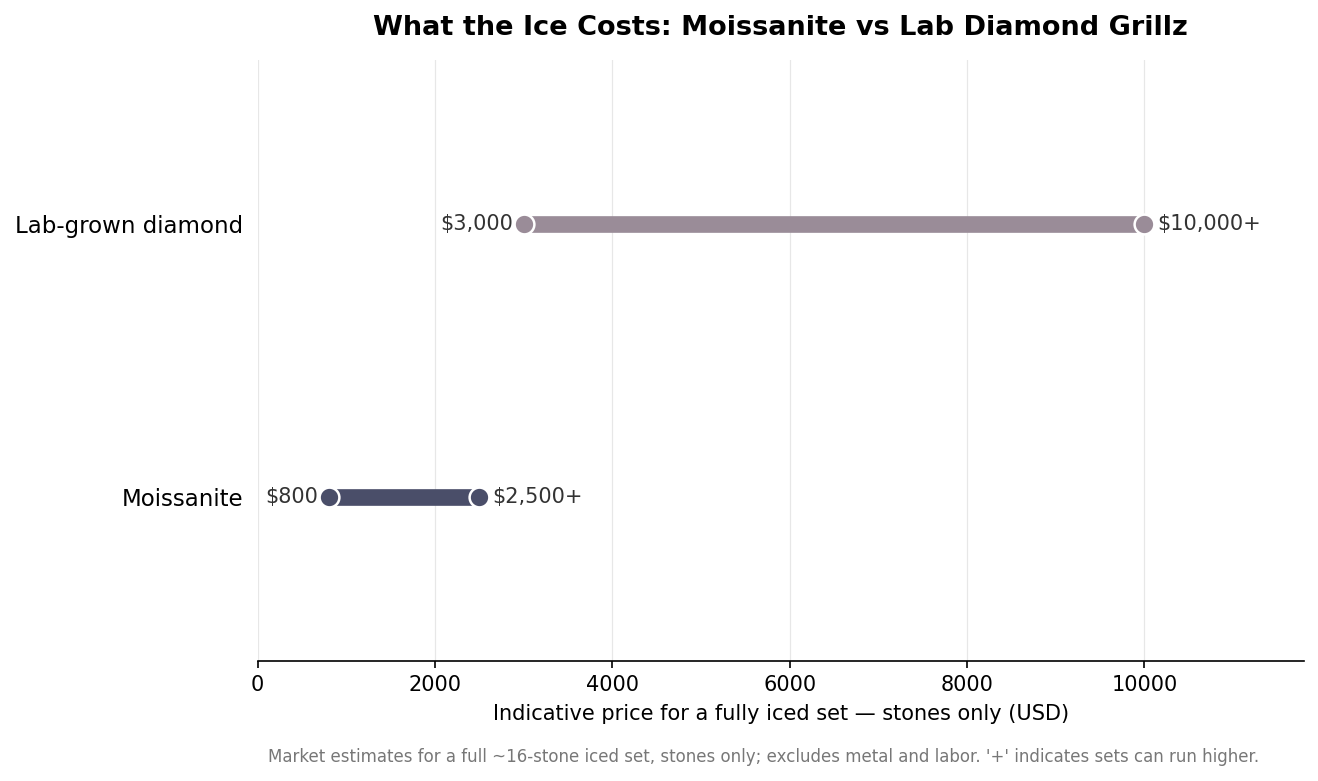
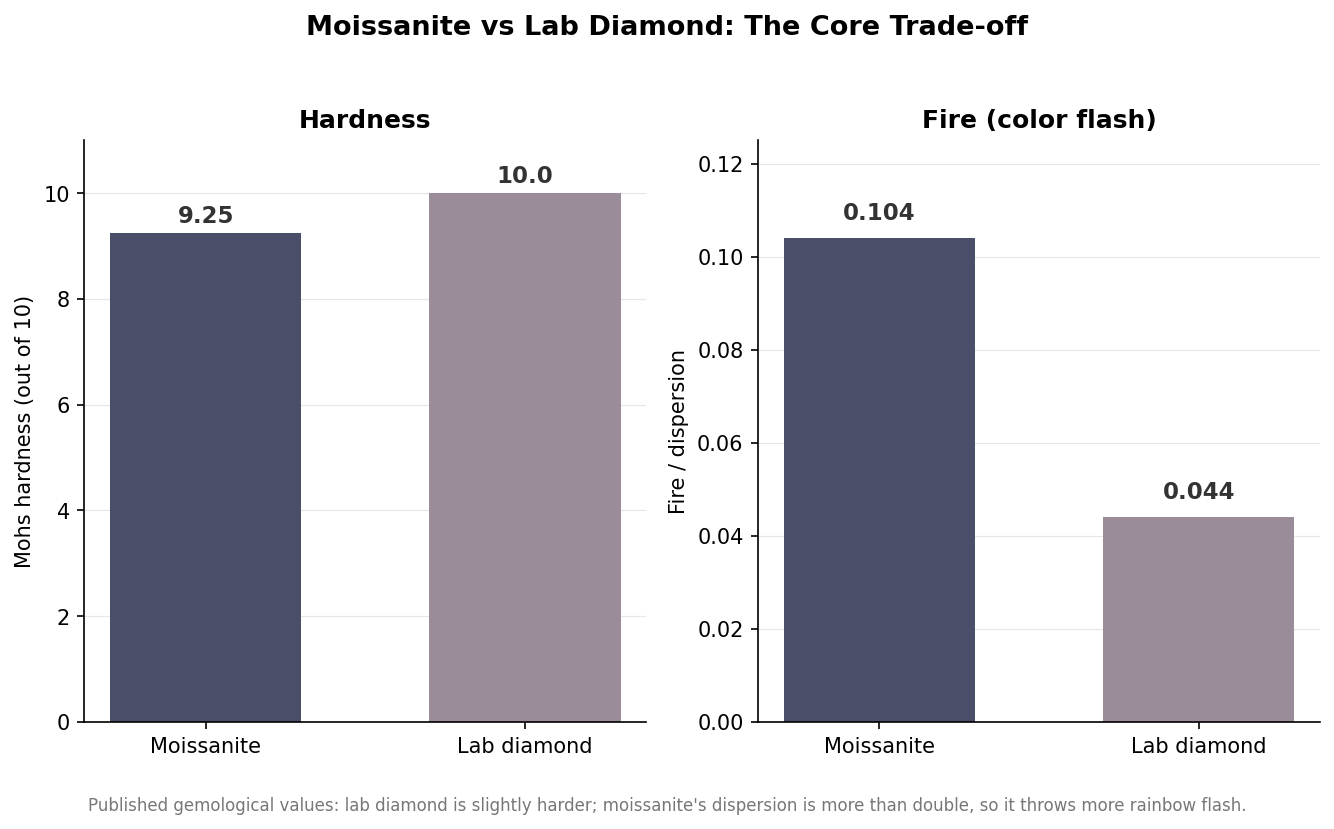
Moving up, stone-set grillz place individual diamonds or moissanite in specific spots: a single stone per tooth, a bar across the front, or a small pattern like a cross or an initial. This is the sensible middle ground between plain metal and full coverage in stones, and it is popular for single teeth and partial sets where you want one detail to stand out. At the top of the range, bustdown or iced-out grillz flood the whole surface with hand-set stones so the metal nearly disappears under sparkle. The labor of setting hundreds of small stones by hand is real, which is why this is the most expensive style by a wide margin and why it is more of an event and performance piece than an everyday one.
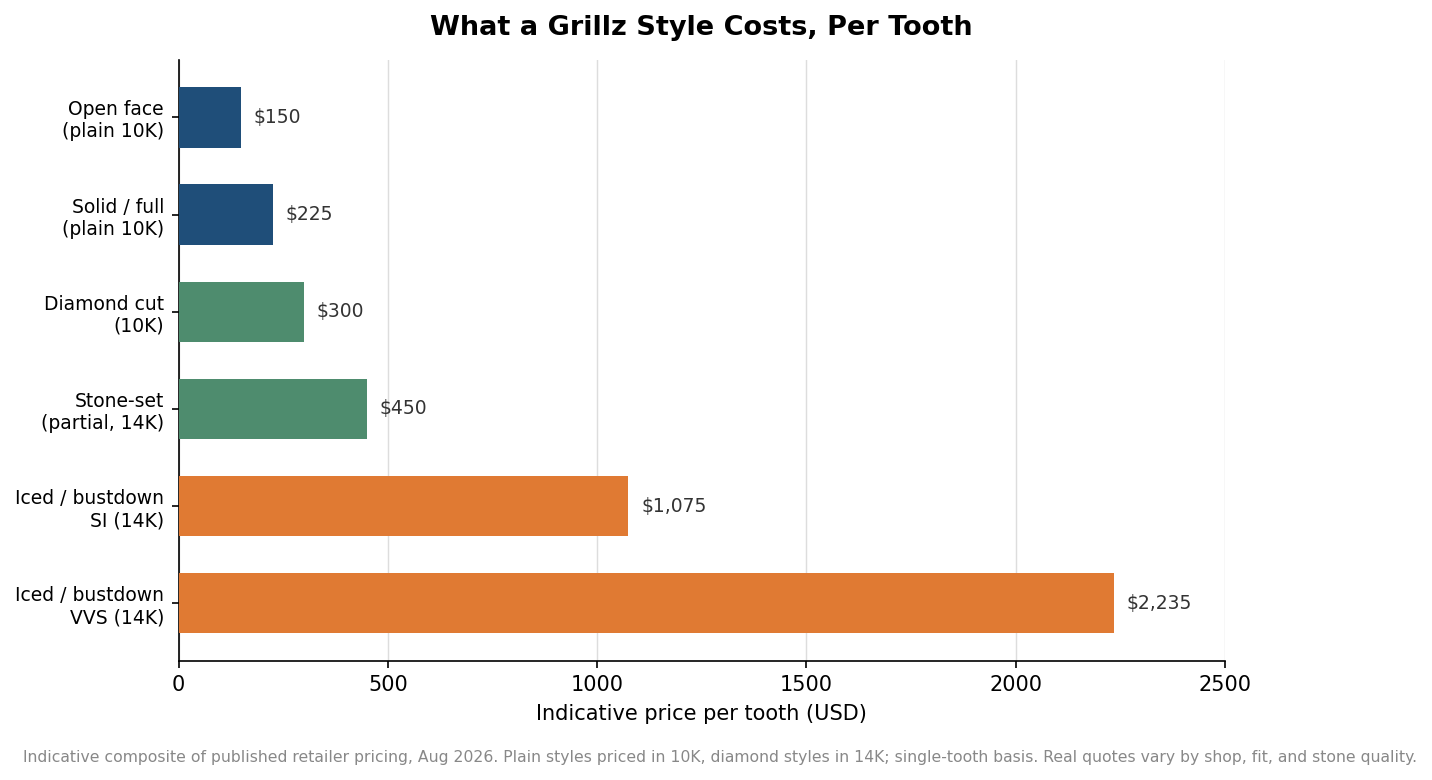
The chart below shows how these style tiers stack up on a per-tooth basis. The jump from plain and diamond-cut styles to stone-set and iced work is the single biggest price lever in the whole decision, larger than the gap between 10K and 14K gold, and larger than adding a couple of extra teeth.
Fangs, single teeth, and custom shapes
A few styles sit outside the coverage-plus-texture framework because they are about shape rather than finish. Fang grillz extend the canine teeth into elongated points for a sharper, more dramatic look, and they can be built as open face or solid and worn top, bottom, or both. A single tooth is exactly what it sounds like and is the lowest-commitment way to wear gold in your mouth, often chosen as a first piece or to cap one specific tooth. Custom shape and letter grillz go furthest from the classic look, working initials, symbols, or novelty shapes into the design so the piece is unmistakably yours. These are worth flagging early to whoever is making the grill, because they change the CAD design step and can add to both cost and turnaround.
How many teeth, and top, bottom, or both
Style and tooth count are separate decisions, and it is worth treating them that way. The common counts are two, four, six, eight, and ten teeth per row. Two to four teeth is the minimalist zone, usually styled as canine caps or fangs, and it is a low-key way to start. Six teeth is the most-ordered configuration for a reason: it covers canine to canine across the front, which is the zone people actually see when you talk and smile, so it delivers most of the visual impact for a middle-of-the-road price. Eight teeth extends into the premolars and closes the side gaps that show when you laugh, and ten teeth is full wall-to-wall coverage for a row.
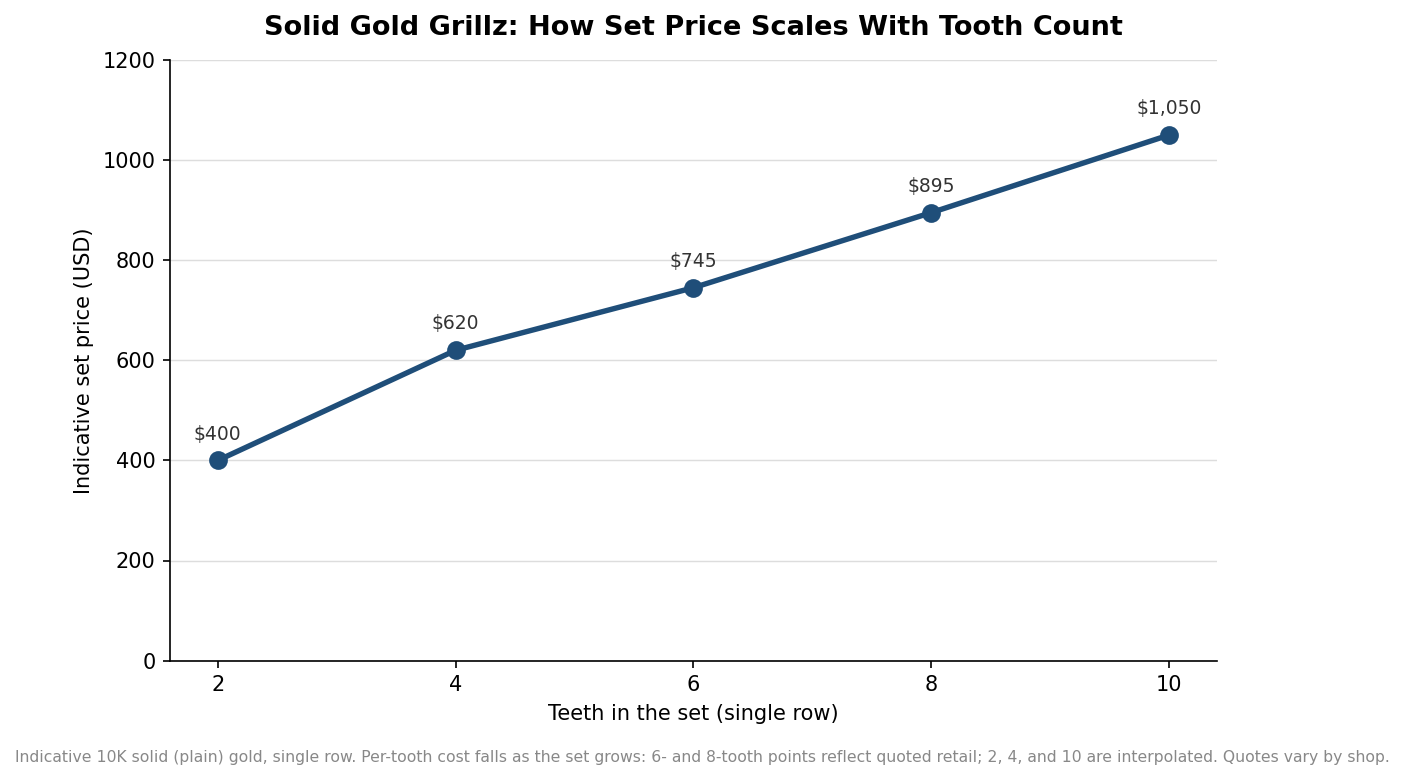
Placement matters as much as count. The top row does the most work during speech and in photos, so a top set generally gives the highest visible return; many wearers start with a six-tooth top and add a bottom later, or stack six-on-six for symmetry. Because a plain grill’s per-tooth cost falls as the set grows, the jump from six to eight teeth costs less than you might expect. The chart below shows how an indicative solid 10K top set scales from two to ten teeth; the curve flattens as you add teeth, which is why an eight-tooth set is often better value per tooth than a two-tooth one.
Matching style to budget, occasion, and timeline
Put the pieces together and a few clear paths emerge. If you want an everyday piece and a lower entry price, an open face or plain solid set in 10K, six teeth on top, is the workhorse choice. If you want visible sparkle without the top-tier cost, diamond cut or a light stone-set gets you there for a fraction of a full bustdown. If the grill is for stage or camera and budget is secondary, iced-out work delivers the maximum flash, with the understanding that it is a specialty piece rather than a daily one.
Whatever style you choose, two practical notes apply. First, every custom grill is built from a dental impression or scan, so the fit is only as good as that mold; a clean impression is what lets any of these styles seat properly. Second, plan for turnaround. Plain and open-face pieces can move quickly once a shop has your mold, with some quoting roughly six to eight business days of production time, while diamond cut, stone-set, and especially iced work take longer because of the added cutting and hand-setting. If you need the grill for a specific date, order several weeks out and confirm the production window in writing before you pay. All prices here are indicative ranges drawn from published retailer pricing and will vary by shop, metal, fit, and stone quality; treat them as a map of the terrain, not a fixed quote.